Planning a seasonal wedding in NJ? You’re definitely after something pretty, but you need to think about practicality as well. The season has a bigger impact than you might think.
It changes your light, your timeline, your comfort, and the pace of the day. A wedding in April won’t photograph like a wedding in August. A November ceremony won’t give you the same light as one in June. Even at the same venue, the final gallery can look completely different depending on the time of year.
New Jersey and the greater Philadelphia are experience all the seasons, so there’s a lot of potential variety in your wedding. Spring can shift fast. Summer can get hot and heavy. Fall can be ideal but short on daylight. Winter can look clean and dramatic, but only if you build the timeline around it.
The good news is that every season can give you strong photos. You just have to plan with the season instead of treating it like an afterthought. That also means thinking about related choices, like indoor vs outdoor weddings in NJ and which is better for your photos, before you lock in your setup.
What Does A Seasonal Wedding In NJ Mean For Your Photos?
A seasonal wedding in NJ molds photos via lighting, color, timing, weather, and venue choice. Spring usually gives you softer light and fresh color but less predictable weather. Summer gives you longer days but harsher sun and more heat. Fall can bring the best balance of color and flattering light, but has less daylight. Winter can look clean, dramatic, and elegant, but it usually demands earlier photo timing and stronger indoor options.
Spring Weddings In NJ And PA
Spring weddings usually have a lighter, fresher look on camera. Trees and flowers grow back, so the background feels softer than it would in peak summer or winter. That adds a lot of romance to the gallery without much extra styling.
The light is one of spring’s biggest strengths. It’s often gentler than summer light, which makes portraits easier to manage earlier in the day. It’s more flattering on skin tones, and the background usually has enough color without feeling busy. That’s a big reason a spring wedding in PA or New Jersey appeals to couples who want a clean, natural look.
But consistency is the thing you need to keep an eye on. Spring weather is hard to predict. Rain is common, wind can show up with little warning, and temperatures can swing enough to affect the flow of the day. So while spring can be beautiful, it does require some flexibility.
The best way to handle that is with a venue that gives you real options. Outdoor space is great, but you also want an indoor area or covered space that still looks intentional in photos.
Best Time Of Day For Spring Photos
It’s not the only valid time in spring, but late afternoon is usually the best time for portraits. The light tends to be softer and more forgiving, and temperatures often feel better by then too.
Best Venue Style For Spring Weddings
Venues with gardens, covered patios, terraces, and strong indoor backup work well in spring. You get the benefit of the season without gambling the entire photo plan on a dry forecast. If you’re still searching, the ultimate guide to finding a unique wedding venue in NJ can help you narrow things down in a more practical way.
Summer Weddings In NJ
Summer’s biggest advantage is time. The days are longer, so your timeline has the most wiggle room. You’re less likely to feel rushed through portraits, and there’s more room to move things around if the day runs late.
Summer also gives you full landscapes. Trees are lush, gardens are at their peak, and outdoor ceremony spaces often look their most vibrant. That can make a gallery feel fuller and more energetic.
Light and heat are the things you need to look out for. Summer sun in New Jersey and Philly can be harsh in the middle of the day. It creates harder shadows, stronger highlights, and more squinting. Even when the setting looks great, the conditions may not be especially flattering.
Heat and humidity also affect how people feel, and that’ll come through in the photos. Hair, makeup, formalwear, and energy can all shift at the drop of a hat. A summer wedding can photograph beautifully, but the schedule needs to respect the conditions.
Best Time Of Day For Summer Photos
Late afternoon into sunset is usually the strongest window for summer portraits. That’s when the light is softest and people are often more comfortable.
Best Venue Style For Summer Weddings
Summer works best with scenic venues that also offer respite. Your guests will thank you for the shade, air conditioning, and indoor access. Open space looks great, but it helps a lot if people can step inside and reset.
Fall Weddings In NJ
If couples ask which season tends to photograph best, most will usually say fall. Fall wedding NJ photos stand out because the season gives you a lot without requiring much compromise.
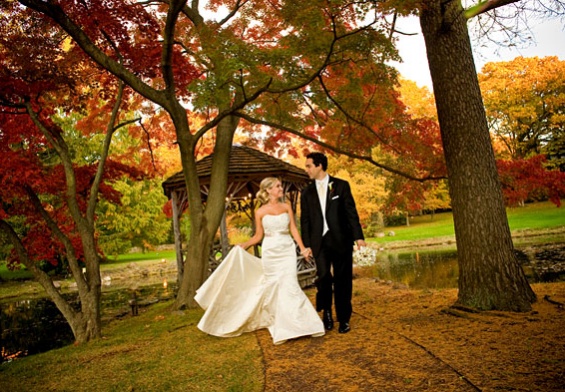
The temperatures are usually more comfortable. The light is softer than summer. The background adds natural depth with reds, oranges, yellows, and muted greens. Even simple portraits can look layered and intentional because the environment does so much heavy lifting.
Fall also feels balanced. You still get outdoor atmosphere, but without the summer heat or glare. For a lot of couples, that makes fall the easiest season to work with visually.
Its one real limitation is daylight. Sunset starts moving earlier and keeps moving earlier as the season goes on. A timeline that works in early October may not work in mid-November if you want natural light portraits after the ceremony.
Best Time Of Day For Fall Photos
Earlier than many couples expect. Late-day portraits are still possible, but you need to check the actual sunset time and work backward from there.
Best Venue Style For Fall Weddings
Fall works especially well with venues that take advantage of the natural surroundings. Properties with trees, open grounds, or scenic views can make the most of the season, as long as you can retreat inside once daylight starts dropping.
Winter Weddings In NJ
Winter weddings won’t grant the lush greenery or long daylight hours of the other seasons, but they can create a very different kind of strength. The backgrounds are often cleaner, the light can feel softer, and the focus shifts more toward faces, clothing, and emotion.
That is one reason winter wedding photography in NJ can feel more intentional. The gallery often looks less busy, which can be a real advantage if you prefer a cleaner visual style.
But you have to think about the timing. Winter has very little daylight, and it goes away quickly. If you are planning an evening ceremony and hoping for a long stretch of outdoor portraits afterward, winter’s probably not the greatest idea.
Cold weather also affects how long people want to stay outside. Even a short portrait session can feel much longer when it is windy and freezing. So winter weddings usually need a tighter plan and stronger indoor support.
Best Time Of Day For Winter Photos
Midday to early afternoon is usually best. If natural light matters to you, you need to plan early. It also helps to know how far in advance to book a wedding photographer in South Jersey if you’re aiming for a popular date.
Best Venue Style For Winter Weddings
Indoor spaces are strongest during the winter. Large windows, bright rooms, neutral walls, and many photo locations inside the venue can make a huge difference if outdoor time is limited.
Seasonal Lighting Differences That Matter Most
Lighting is a big part of why one season photographs differently from another.
Spring light is usually softer and easier to manage than summer light. Summer gives you the most daylight, but often the harshest conditions in the middle of the day. Fall light tends to be warm and flattering, but the usable window gets shorter. Winter light can be clean and even, though it disappears fast and forces a tighter schedule.
That’s why the best time of day changes by season. In spring, you usually have more flexibility. In summer, later is usually better. In fall, timing gets tighter. In winter, you often need to work earlier than feels natural for a wedding day.
Couples often choose the venue first and think about the timeline second. For photos, that order should really be reversed. The timeline has to respect the season, or the season will force the timeline to respect it.
Weather Challenges And Venue Strategy
Every season comes with something to manage. Spring brings rain and quick temperature swings. Summer brings heat, humidity, and harsh midday light. Fall brings shorter daylight hours. Winter brings cold and early darkness.
You’re not trying to avoid every challenge. But you do want to limit the challenges your venue and schedule can provide.
Flexibility matters most in the spring. Comfort and shade matter in the summer, while indoor quality matters in the winter. Finally, timing matters in the fall. A venue should do more than just look good in photos, but work with the season you have in mind.
That’s more than a mere style issue. NJ winter wedding planning requires keeping indoor photo options, earlier, daylight-friendly timelines, and weather backup planning. Those factors directly affect how the day photographs.
If you choose a venue without thinking about the season, you’ll have to fight with both. If you match the venue to the season, the day usually runs better and the photos do too. Budget matters too, especially once venue and seasonal logistics start stacking up, so it helps to understand what is the most expensive part of a wedding in NJ.
What Matters Most For Seasonal Wedding Photos In NJ
- Spring gives you softer light and fresh color, but comes with unpredictable weather
- Summer offers long days and vibrant scenery, but requires planning around harsh sun and heat
- Fall usually provides the best balance of color, comfort, and flattering light, but daylight fades earlier
- Winter creates clean, focused images, but demands tighter timelines and strong indoor options
- The best results come from matching your timeline and venue to your season, not fighting against it
Which Season Is Best For Your Wedding Photos?
There is no single winner.
Spring can feel fresh and light. Summer can feel full and energetic. Fall can feel rich and balanced. Winter can feel clean and dramatic.
There’s no one season that’s best in general. Instead, ask yourself which season fits the kind of gallery you want and the kind of planning you are willing to do.
If you want lush scenery and longer days, summer may make sense. If you want softer conditions and strong natural color, fall may be the better fit. If you want something lighter and more flexible visually, spring may work well. If you want a more focused, elegant look, winter may surprise you.
Every season gives you something. Every season asks for something too. Once you understand that trade, you can plan around it and get much better results.