A spinal cord injury can change transfers, sleep, and the next doctor visit. In the first weeks, a headline about restored movement can be hard to read. A person may wonder whether the finding applies now. A July 2026 trial gives families human safety data on stem cells for paralysis after spinal cord injury.
Doctors followed four men with complete spinal cord injuries in the neck after neural progenitor cell transplants. Doctors made safety the main goal and tracked motor changes as a secondary measure. Follow-up lasted about two to four years.
Stems Cells for Paralysis
Four men received 2 million neural progenitor cells 14 to 28 days after injury. Doctors saw no tumors or graft-related side effects during follow-up. Two men moved to higher AIS grades. Scientists still need larger controlled trials to test how well stem cells for paralysis work.
What the 2026 Trial Tested
Ages ranged from 26 to 66. Each man had a complete injury in the neck between C4 and C6. Before enrollment, surgeons treating spine trauma had already stabilized each man’s acute spinal injury. Nature Medicine reported a 2-million-cell dose for each man. The team thawed the stored cells four days before surgery and let them recover in culture.
Surgeons used ultrasound to find the center of the injured cord. They injected the cells through a needle over more than 60 seconds. The needle stayed in place for three more minutes before removal.
Transplants took place 14 to 28 days after injury. Doctors kept tacrolimus at target levels for six months. They tapered the drug and stopped it by month nine to reduce rejection risk. Seven people entered screening, and four met the trial rules.
Men had to remain AIS A. On the standard spinal cord exam, AIS A means a complete injury. Doctors checked AIS A status again on transplant day. Active infection, severe breathing failure, or major organ problems could exclude someone.
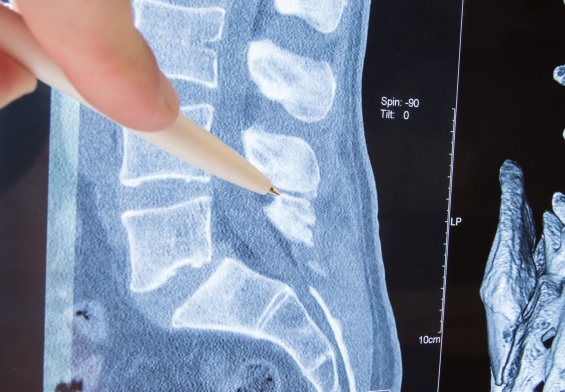
After a neck injury, a family may meet surgeons from either field. Surgeons from either field may reach spine practice through neurosurgical and orthopedic spine training. During acute care, surgeons may review imaging and decide whether the spine needs more stabilization.
Doctors tracked side effects for 52 weeks and kept following the men after the first year. They scheduled MRI at weeks 3, 12, 24, and 52. Nerve exams continued through week 52. Emergency care and spine surgery were still part of early recovery when doctors gave the transplant.
Why Researchers Used Neural Progenitor Cells
Scientists start with mature human cells and reprogram them. The cells can then form other cell types. Scientists turned the reprogrammed cells into neural progenitor cells before transplant. A spinal cord injury can damage neurons and myelin-producing cells. Spinal cord injury can also break nerve connections through the cord.
Animal tests gave the team several reasons to try this cell type in people. Transplanted cells became neurons and other nerve cells. Animal tests also showed myelin repair, axon growth, and release of growth factors. The animal findings gave the team enough safety data to begin a first human trial.
In people, doctors could measure strength, feeling, scans, and daily function. Doctors could not remove spinal cord tissue later to inspect the graft. Whether the cells survived for years or joined working nerve circuits remains unknown.
Motor Scores and AIS Grades Changed During Year One
All four men gained points on motor testing during the first year. Median motor gain was 13 points, with scores rising from 10 to 40 points. Two men moved from AIS A to higher grades. Doctors graded one man AIS C and a second man AIS D. An AIS C or D result means some motor function appeared below the injury level.
AIS records motor and sensory function below the injury, including sacral function. A higher grade can show nerve gains. Walking ability needs its own test. Readers can check whether the paper reports walking itself alongside AIS.
Stem Cells for Paralysis: What the Safety Results Mean
Safety was the primary endpoint. During two to four years, doctors saw no tumors or graft-related side effects. Scans showed stable graft sites. Doctors also tracked problems tied to surgery and immune suppression.
Everyone knew who received the transplant, and the team used no random assignment. Results from four Japanese men may not apply to a broader group. Nerve gains were a secondary endpoint. Four men cannot show how well the treatment works.
Why Natural Recovery Complicates the Results
Some nerve function can return during the first year after a traumatic spinal cord injury. Without a control group, four men cannot show how much gain came from the transplant. The team compared the men with a historical registry group. Trial participants had larger score gains. A future randomized trial could make the comparison fairer.
Surgery and rehab also affect recovery after injury. Doctors may find spinal cord compression when a fracture or disc presses on the cord. They may need to relieve pressure or stabilize the spine. Acute treatment and rehab have already influenced recovery by the time doctors give a later cell transplant.
Several factors can change motor scores at once. The 2026 study cannot assign the gains to the cells. A controlled trial would give researchers a stronger comparison and a better estimate of treatment effect.
Metal Hardware Made Graft Tracking Harder
Metal spinal hardware distorted advanced diffusion scans and tract imaging. Doctors could have used the scans to study nerve paths around the injury. Hardware distortion made the diffusion scans unusable.
Doctors also could not tell how long the graft stayed alive. Tacrolimus stopped after a limited period. After immune suppression ended, doctors had no way to check the graft directly. Future trial teams need a way to see whether cells stay alive and active in the spinal cord.
After week 52, motor function remained largely stable and AIS grades did not change. Daily-independence scores also changed little after week 52. Two men had small score drops after changing bladder management.
Questions About the 2026 Spinal Cord Trial
Are stem cells for paralysis available as standard care in the United States?
No. The 2026 transplant remains under study. Someone offered a paid stem-cell product can ask two questions. Does FDA oversee the clinical trial? Does the product have FDA approval?
Did the study track daily independence as well as motor scores?
Yes. Doctors also used SCIM III, a 100-point scale for independence in daily activities. Scores rose from baseline in all four men during the first year.
Why did the trial treat participants 14 to 28 days after injury?
Researchers treated the men 14 to 28 days after injury, during the subacute phase. A study months or years later tests a later injury stage. Readers should compare such work with chronic injury studies.
Stem Cells for Paralysis: What to Check Before Believing a Headline
Readers can start with four details: cell type, injury timing, control group, and main endpoint. Food and Drug Administration guidance says a trial listing does not give a product legal marketing status. During a visit with a neurosurgeon, a person can bring current scans and ask which findings need care now. Future trial teams need a control group and a way to track graft survival alongside motor scores.
Sources