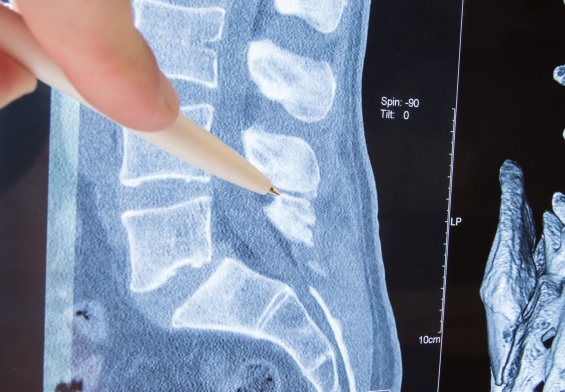

A herniated disc sends patients toward two different waiting rooms. A referral letter rarely explains why. The real question hiding inside that letter comes down to neurosurgeon vs orthopedic spine surgeon. Both titles get used at the front desk like they mean the same thing. They do not.
Both surgeons can treat the same disc, the same vertebra, sometimes even the same patient across two opinions. What separates them starts back in training. One path spends seven years almost entirely on the nervous system. A second path spends five years across the whole skeleton. Neither surgeon has touched a spine yet when that path begins.
Neurosurgeon vs Orthopedic Spine Surgeon: The Question Behind the Referral Letter
Both specialties can operate on a herniated disc. Both can treat a pinched nerve or a narrowed spinal canal. A patient rarely learns which specialty wrote the referral, or why. Neurosurgery and orthopedic surgery come from separate residencies. An overlap in what each surgeon can treat is real. That is why the choice can look random from the outside.
Patients can often choose between a fellowship-trained neurosurgeon and a fellowship-trained orthopedic spine surgeon for the same operation. That includes a laminectomy, a discectomy, or a spinal fusion. Outcomes are often alike either way. A real difference sits further back, in the years before either surgeon finished training.
The Same Herniated Disc, Two Different Training Paths
Decades ago, two training paths decided that spine surgery fit inside their scope, and the neurosurgeon vs orthopedic spine surgeon split traces back to that decision more than to anything a patient’s diagnosis dictates. Neurosurgery claimed it early. Spinal cord and nerve roots are part of the nervous system, and neurosurgery grew up around that system. Orthopedic surgery claimed the spine too. Spine bone and joint tissue are the same stuff orthopedic surgeons spend years learning to fix in other body parts.
Inside a Neurosurgery Residency
Neurosurgery training runs seven years, sometimes eight when a research year gets added, and nearly every one of those years touches the brain, the spinal cord, or the nerves in some form. Spine surgery is a core part of the residency, not an elective add-on.
A 2019 study looked at national case logs and published its findings in the Journal of Bone and Joint Surgery. It found that graduating neurosurgery residents logged an average of 433.8 spine cases during training, since spine work sits inside nearly every rotation in that field rather than waiting for a later fellowship year.
Inside an Orthopedic Surgery Residency
Orthopedic training runs five years and covers the whole skeleton, not only the spine, so hips, knees, shoulders, hands, and broken bones all get training time alongside whatever spine work a given program offers.
The same 2019 study found that orthopedic residents logged an average of 119.5 spine cases across those five years, a fraction of the neurosurgical total. Surgeons who want to focus on the spine often add a one-year fellowship after residency, and case log data from the Journal of Neurosurgery: Spine puts that fellowship at another 300 to 500 cases before solo practice begins.
What a Spine Fellowship Adds to Either Path
Add the fellowship years to the count, and the difference narrows fast. That 2019 case log study reached a clear conclusion once fellowship numbers got added in. Orthopedic spine surgeons who finish a fellowship can end up doing as many spine cases as neurosurgery residents. Sometimes they do more, even before solo practice starts.
Neurosurgeons rarely add a similar spine fellowship. Training alone already gives them that volume. A neurosurgeon starting practice and a fellowship-trained orthopedic spine surgeon starting practice can arrive with about the same spine experience.
Neurosurgeon vs Orthopedic Spine Surgeon: What Happens Outside the Spine
The comparison changes once the topic moves past the spine. A neurosurgeon’s other focus is the brain. Tumors, aneurysms, and skull-base problems sit inside the same seven-year training that also covers spine surgery. An orthopedic spine surgeon’s other focus is the rest of the skeleton. Hips, knees, shoulders, and broken bones belong to the same five-year training, before a spine fellowship narrows the focus.
Neither surgeon spends a whole career on backs and necks alone, unless someone builds a practice that way on purpose. Knowing which second focus a surgeon has counts in two cases. One is a spine problem near the base of the skull. A second is joint pain plus the main back complaint. That is why the neurosurgeon vs orthopedic spine surgeon decision often comes down to a surgeon’s whole practice, not only the diagnosis in front of them.
When a Second Opinion Points Toward a Different Specialist
A second opinion can do more than adjust the treatment plan. It can send a patient to a whole different specialty. Someone first seen by an orthopedic surgeon for a plain disc problem might get redirected to neurosurgery. That happens if scans show nerve trouble reaching toward the brainstem.
Sometimes the reverse happens too. A neurosurgeon may send a patient with a mostly mechanical, curve-related spine problem to an orthopedic colleague instead. That colleague handles more of this kind of repair work. Patients facing one of these borderline cases can request a second opinion visit before they commit to either specialist.
Conditions Where One Training Background Usually Takes the Lead
Scoliosis that needs surgical correction in a growing child almost always ends up with an orthopedic surgeon. Some diagnoses sort toward one specialty before a patient even asks, and this is one of the clearest examples. Orthopedic surgeons handle that more often.
Bone growth and correction training sits inside their residency. A neck problem that reaches toward the base of the skull or brainstem usually ends up with neurosurgery instead. That anatomy is part of the same training as brain surgery.
Both specialties treat spinal stenosis symptoms about equally. Decompression surgery itself does not favor one training background over the other. That stays true even though the diagnosis often gets mistaken for ordinary aging, until an MRI catches the real narrowing. Treating a single-level herniation, or plain degenerative disc disease, with minimally invasive spine surgery is common ground in the same way. For every case like scoliosis or a skull-base problem that sorts cleanly toward one specialty, there are just as many, like stenosis or a single-level herniation, where either specialist can do the job well.
Common Questions About Choosing a Spine Surgeon
Does a neurosurgeon or an orthopedic surgeon perform spine surgery more often?
Neurosurgeons perform spine surgery more often as a share of overall caseload. Spine work makes up a bigger portion of neurosurgical training than of orthopedic training. That does not mean any one orthopedic spine surgeon operates less.
A fellowship-trained orthopedic spine surgeon who focuses only on the spine can perform more spine surgeries in a year. A general neurosurgeon splitting time between brain and spine cases may do fewer. That difference, in other words, is what neurosurgeon vs orthopedic spine surgeon measures: a specialty-wide pattern, not a guarantee about any one surgeon.
Can an orthopedic surgeon treat a brain problem instead of a neurosurgeon?
No. Orthopedic training does not include brain or cranial nerve work. An orthopedic surgeon sends any diagnosis involving the brain, skull base, or cranial nerves to a neurosurgeon. That pattern only runs one direction.
A neurosurgeon whose practice includes spine work can treat both kinds of cases. That is part of why some patients see a neurosurgeon even for a back complaint that looks purely orthopedic.
Should a patient choose a specialist based on the surgeon’s title alone?
Title alone skips a more telling number. That number is how many spine cases a given surgeon performs in a typical year, whether that surgeon trained in neurosurgery or orthopedics. Patients who want more than that single number can review what to look for in a spine surgeon. Credentials, bedside manner, and outcomes usually say more than a title by itself.
Neurosurgeon vs Orthopedic Spine Surgeon: What to Bring to Your Next Appointment
A surgeon’s training and case count say more than the title on the door. A patient can ask how many spine cases a surgeon performs each year, whether a fellowship followed residency, and how a practice handles second opinions. Once those details sit on the table, the neurosurgeon vs orthopedic spine surgeon choice turns into a smaller question. A bigger question is whether this surgeon has done this particular procedure enough times to do it well.