
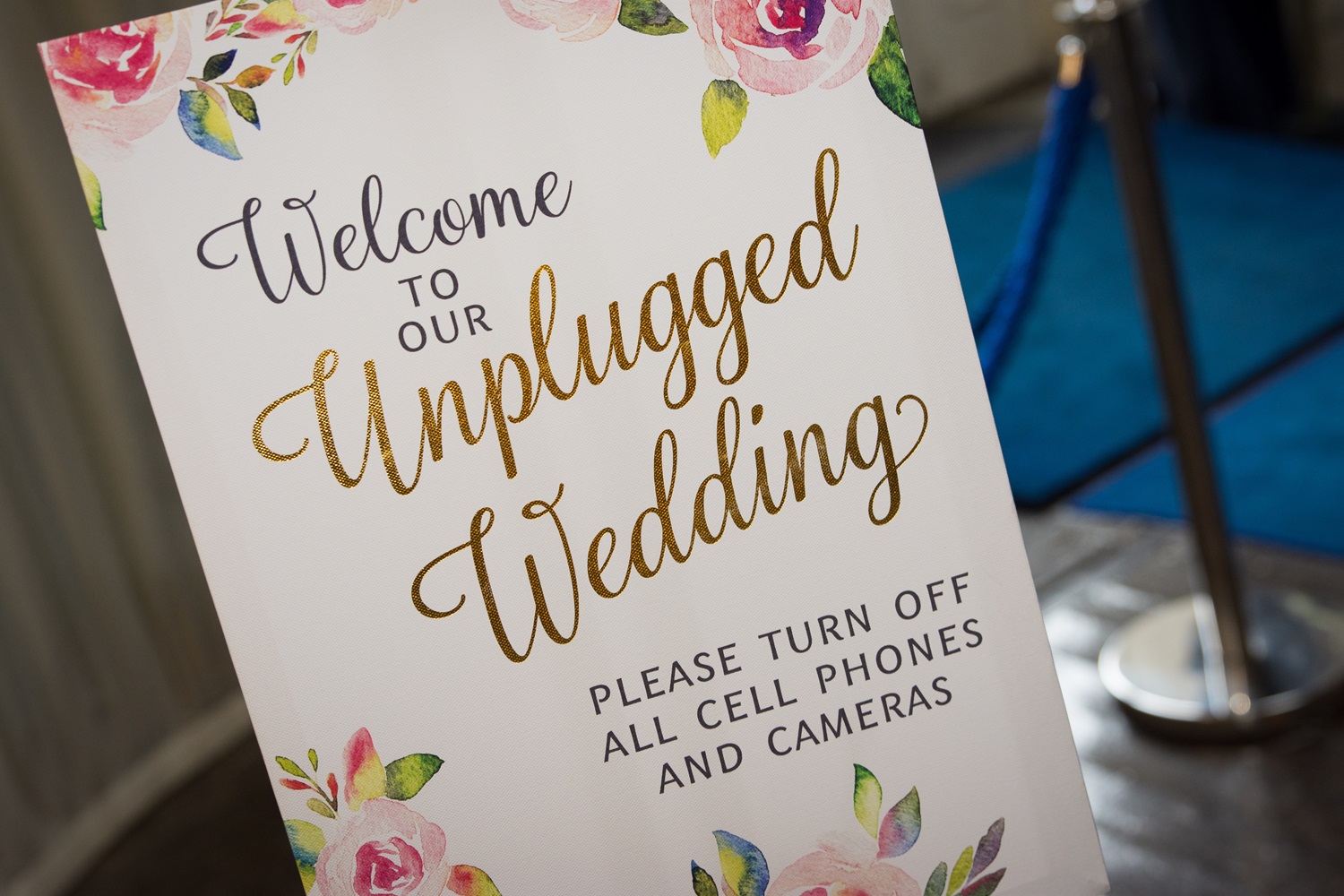
All it takes to handle smart glasses, phones and other recording devices at what’s supposed to be an unplugged wedding is a simple request not to record, ideally right before the ceremony starts. Many couples overcomplicate this, because that request requires a delicate touch. Nobody wants to police the room, nobody likes the person who does police the room, and how can you ask 90-year-old Aunt Kathy to put her phone away?
At the end of the day, you want your guests to pay attention to what’s happening in front of them instead of through a screen. And your photographer to have clear shots down the aisle.
But phones aren’t the only potential recording devices in the room anymore. The recent wave of camera-equipped smart glasses are capable of recording much more discreetly than any camera ever could. Below, we’ll cover how to make the request and how it impacts the photos that really matter — the ones your wedding photographer takes.
An Unplugged Wedding Usually Ends After the Ceremony
An unplugged wedding is a ceremony where guests are asked to put away phones, tablets, personal cameras, camera-equipped smart glasses, and other recording devices. All recording is handled by the photographer and videographer hired by the couple.
For most weddings, the rule starts before the processional and ends after the recessional. The ceremony itself is the most important part to keep unplugged, so the rules can relax afterward. Guests can pull their phones back out at cocktail hour. Some couples extend the request through dinner, but it’s much harder to keep devices out of the reception.
Think about this from the photographer’s perspective. A guest leaning into the aisle can appear in the professional frame, and a raised screen may block the faces behind it. A phone flash during the first kiss can ruin that once-in-a-lifetime moment.
Letting guests know who will be taking photos also makes the request easier to follow. People are more willing to leave their own cameras alone when they know a professional team is already covering the ceremony.
Smart Glasses Changed What “No Phones” Means
Smart glasses have become a general privacy issue that extends beyond weddings. In August 2026, PetaPixel reported that several UK businesses and entertainment venues had begun banning Meta smart glasses or asking customers to remove them because of concerns about people being recorded without their knowledge.
Of course, these UK businesses and venues aren’t holding American weddings, but it’s easy to see their reasoning. For example, a convention organizer put the ban in place after numerous attendees said they were reluctant to return due to being filmed without permission or consent.
New York has taken a similar approach in a much more formal setting. Effective July 20, 2026, the New York State Unified Court System prohibited smart glasses and other recording eyewear or headwear inside court facilities. The policy applies to prescription and non-prescription devices.
“Please put away your phones” no longer covers every device a guest could use to record.
Guests who rely on prescription smart glasses should hear about the rule before arriving, so they have time to bring ordinary prescription frames.
Give Guests Wording They Can Actually Follow
As mentioned above, the request itself requires a delicate touch. It can’t sound too severe or it will disgruntle guests. Keep it simple; just say what’s included and when the rule ends.
Including the rule on your wedding website or invitation is a great way to plant the seeds. Here’s an example of what it could say:
We’d love to have you fully present with us during the ceremony. Please keep phones, personal cameras, camera-equipped smart glasses, and other recording devices put away from the processional through the recessional. We’ve hired a professional photo and video team to capture the vows, and you’re welcome to take your own photos again afterward.
The same idea can be shortened for an unplugged wedding sign near the ceremony entrance:
Unplugged ceremony
Please put away phones, cameras, smart glasses, and other recording devices until after the recessional. Thank you for being here with us.
With the devices spelled out, a guest does not have to guess whether smart glasses count.
Some Guests Have Their Own Reasons to Stay Off Camera
These privacy considerations shouldn’t only apply to the couple. Certain guests may not want to be in public photos for any number of reasons.
Maintaining an unplugged wedding makes it easier for the couple to control the photos after the fact. They can ask their photographer about options for keeping wedding images private, including how galleries are delivered and who can access them. Once somebody records a ceremony on a personal device, the couple has little control over where that clip is sent or posted.
Let the Officiant Handle the Last Reminder
Guests shouldn’t be hearing the request for the first time as they’re taking their seats. Ideally, the website or invitation gives them advance notice, and the sign at the entrance catches anyone who forgot.
Then the officiant can give one short reminder before the processional:
Before we begin, the couple asks that phones, personal cameras, camera-equipped smart glasses, and other recording devices stay put away until the ceremony is over. Their photography and video team has everything covered, so please enjoy the vows with them.
If someone still forgets, an usher or coordinator can handle it. The couple should not be scanning the seats for devices while waiting to walk down the aisle.
An usher can quietly remind a guest before the ceremony starts. If a phone appears during the vows anyway, the photographer keeps working and the usher can address it.
The Photo and Video Team Gets a Cleaner Ceremony
An unplugged ceremony gives the hired team a cleaner line of sight during the important moments they only get one shot to capture.
This makes the biggest difference during the processional. Without arms and phones extending into the aisle, the photographer has a clearer view of the people walking toward the ceremony. Those are often the kind of frames that later work well near the beginning of a wedding album.
Video benefits for a different reason. A phone several rows back may capture an image of the vows while barely picking up what anyone said. Couples booking a wedding videographer can ask how the team records ceremony audio and where microphones will be placed.
Tell Guests When They’ll See Professional Photos
Ask the photographer when preview images normally arrive and whether the couple can share a few with family afterward. This gives them something to satisfy Aunt Kathy with when official wedding photos can take months to deliver.
The couple can put that expectation on the website too: professional previews will be shared after the wedding, so there is no need to document the ceremony from a seat.
Give the Reminder Room in the Timeline
Build a short buffer before the processional so the officiant can make the announcement and the photography team can get into position without rushing.
Put that buffer into the wedding photography timeline shared with the coordinator, photographer, videographer, and other vendors involved in the ceremony start.
Questions Couples Ask Before Going Unplugged
Is it rude to ask guests to put their phones and smart glasses away?
No. An unplugged ceremony is a reasonable request when guests know about it before the wedding and the rule has a clear end point.
It’s all about the tone, not the wording. Explain that the couple wants everyone present for the vows and that a professional photo and video team is already covering the ceremony.
Guests should also know that the request includes smart glasses and other wearable recording devices, not just phones.
What are the downsides of an unplugged ceremony?
A relative who could not travel may lose the shaky phone clip a cousin would otherwise send that night. If remote family members matter, a planned livestream through the video team or one designated guest can solve that without turning the entire ceremony into open recording.
A few guests may also dislike being told when they can use their devices. Keeping the rule limited to the ceremony makes the request easier to accept than asking everyone to stay unplugged through the entire reception.
What if a guest needs a phone for work or an emergency?
Doctors, nurses, parents with a sitter at home, and other on-call guests may need to remain reachable. They do not need to record the ceremony to keep a phone available.
Silent mode in a pocket works. An aisle seat also lets someone step out quickly without crossing in front of the photographer. Letting the usher know beforehand prevents an on-call guest from being approached because they checked an urgent message.
What if someone needs prescription smart glasses?
Tell guests ahead of time that camera-equipped glasses are included in the unplugged request. Someone who needs prescription lenses can then bring ordinary glasses for the ceremony if necessary.
Settle the Device Rule Before the Invitations Go Out
Decide when the unplugged period starts and ends first. Then use the same list of devices everywhere: phones, personal cameras, camera-equipped smart glasses, and other recording devices.
Put the short version on the sign and the longer version on the wedding website or invitation insert. Add the officiant’s reminder to the day-of run sheet so nobody has to remember it five minutes before the processional.
The photographer, videographer, coordinator, and officiant should all know the plan before the wedding day. Once that is settled, the couple can stop thinking about devices and concentrate on the ceremony itself.
Sources
PetaPixel, UK Venues Ban Meta Smart Glasses En Masse
New York State Unified Court System, Court Policy on Prohibition Against Smart Glasses